Marine carbohydrate therapeutics: from structural diversity to clinical translation
GA, UNITED STATES, September 22, 2026 /EINPresswire.com/ -- A new review traces the development of carbohydrate-based

Press Release Disclaimer: This is a press release distributed through the XPR Media network. It has not been independently verified by our newsroom.
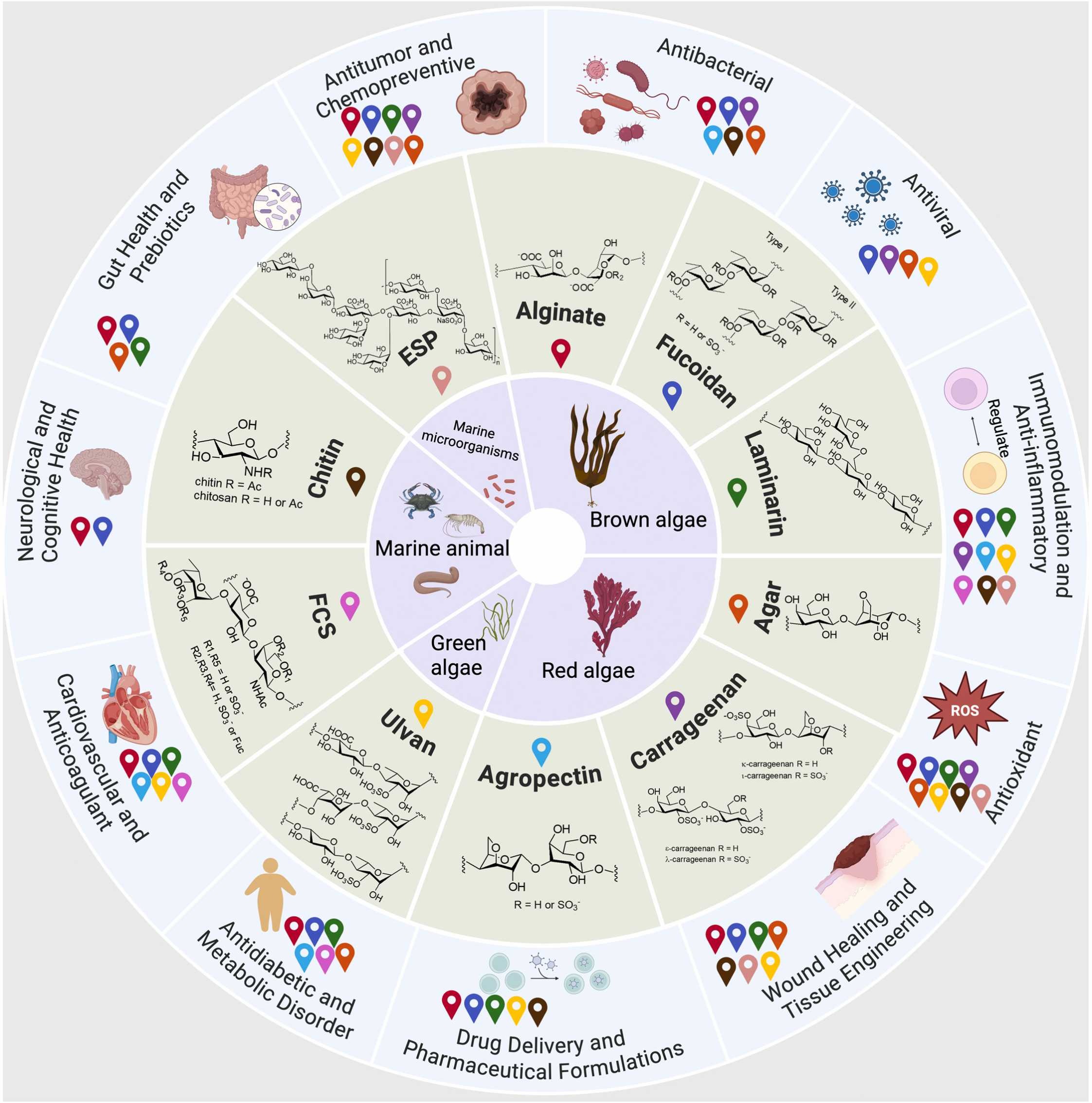

GA, UNITED STATES, September 22, 2026 /EINPresswire.com/ — A new review traces the development of carbohydrate-based medicines originating from marine organisms, from early bioactivity studies to approved products and current clinical trials. It links structural features such as sulfation, molecular weight and branching with therapeutic use, and outlines the production, quality-control, mechanistic and pharmacokinetic challenges that still limit clinical translation.
The ocean contains diverse carbohydrates that could serve as valuable resources for drug development. Algae, marine animals and microorganisms produce polysaccharides and related molecules with structures that are uncommon on land, including distinctive sulfate patterns, sugar linkages and branched architectures. These features can support antiviral, anticoagulant, immunomodulatory and antitumor activity, while also providing useful properties for drug delivery, wound healing and tissue engineering.
A review in Glycoscience & Therapy brought together findings on the sources, structures and biological activities of these marine carbohydrates and examined how some have progressed into medicines. Marine carbohydrates are often studied in terms of individual biological activities, but their clinical development requires a broader understanding of how structure, production, quality control, and mechanisms of action are connected. By examining approved drugs alongside clinical-stage candidates, the review provides a clearer picture of the progress achieved and the challenges that remain.
The authors of the review followed a clinical timeline that begins with cytarabine, a marine-inspired leukemia drug approved in the United States in 1969, and included later carbohydrate-based products derived from alginate, carrageenan and other marine materials. They also surveyed the candidates currently being evaluated in clinical trials for viral infections, cancer, metabolic disorders, tissue repair, cystic fibrosis and neurological disease.
Further, the review focused on what is required to turn a complex natural carbohydrate into a reproducible medicine. Molecular weight, sulfation pattern and monosaccharide composition can all affect activity, but they may also vary with species, season, extraction and processing.
“Our review highlights several priorities for future development: establishing reliable production methods through cultivation, fermentation, or enzymatic processing; improving structural and activity-based quality control; validating molecular targets and mechanisms; and conducting more rigorous pharmacokinetic and safety studies,” says senior and co-corresponding author Guangli Yu. “Progress in these areas will require close collaboration among researchers in glycoscience, analytical chemistry, synthetic biology, materials science, and clinical research.”
References
DOI
10.1016/j.glycos.2026.100047
Original Source URL
https://doi.org/10.1016/j.glycos.2026.100047
Funding information
This research was supported by the National Natural Science Foundation of China (22577126), Qingdao Natural Science Foundation (24-4-4-zrjj-151-jch), Shandong Provincial Key Research and Development Program (2025CXPT116), Qingdao Marine Science and Technology Center (2022QNLM030003-1), Taishan Scholar Climbing Project (TSPD20210304) and Taishan Scholar Young Project (TSQN202306099).
Lucy Wang
BioDesign Research
email us here
Legal Disclaimer:
EIN Presswire provides this news content “as is” without warranty of any kind. We do not accept any responsibility or liability
for the accuracy, content, images, videos, licenses, completeness, legality, or reliability of the information contained in this
article. If you have any complaints or copyright issues related to this article, kindly contact the author above.

Media gallery