
Evolve Collision Centers Publishes Consumer Guidance on Understanding ADAS Calibration Results After an Accident
Ardmore, PA - November 11, 2026 - PRESSADVANTAGE - Evolve Collision Centers is sharing consumer guidance to help

Press Release Disclaimer: This is a press release distributed through the XPR Media network. It has not been independently verified by our newsroom.
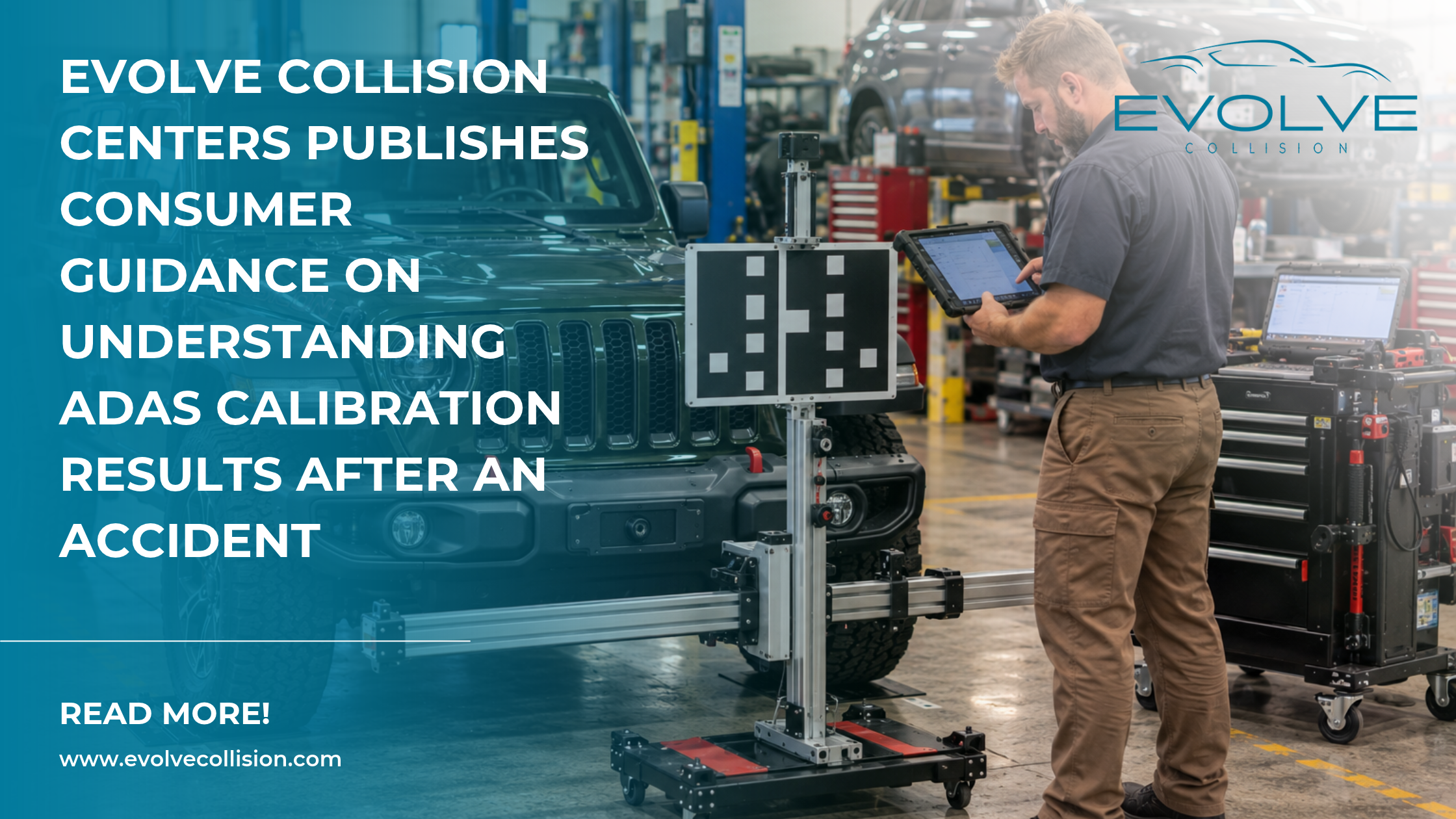

Ardmore, PA – November 11, 2026 – PRESSADVANTAGE –
Evolve Collision Centers is sharing consumer guidance to help vehicle owners understand the results of Advanced Driver Assistance Systems (ADAS) calibration following collision repairs. The November guidance explains how to review calibration documentation, distinguish completed procedures from unsuccessful attempts, and identify electronic system findings that may require additional attention. It provides practical information for drivers who receive technical service records when collecting a repaired vehicle.
The guidance addresses three elements commonly associated with ADAS calibration records: the system evaluated, the reported completion status, and related diagnostic findings. Understanding these elements can help vehicle owners discuss repair documentation with their collision repair facility rather than relying solely on the absence of dashboard warning lights.
Modern vehicles may use cameras, radar sensors, and electronic control modules to support features such as automatic emergency braking, lane departure warning, adaptive cruise control, and blind spot monitoring. Depending on the vehicle and the collision damage, repairs affecting these components or their mounting locations may require inspection or calibration according to manufacturer instructions.
Evolve Collision Centers provides information about electronic system evaluations through its scanning and calibration services. Diagnostic scanning and calibration serve different purposes, and the appropriate procedures depend on the vehicle’s equipment and the work performed.
One important consideration is identifying which system was calibrated. A vehicle may contain multiple cameras and sensors, each with separate procedures and operating requirements. A calibration record may identify the component evaluated, the procedure performed, and the reported result.
For example, a vehicle undergoing windshield replacement following a collision may require front-facing camera calibration if specified by its manufacturer. A report indicating successful completion of that procedure does not automatically establish that a separate radar sensor or another driver-assistance component was evaluated. Vehicle owners can review the service records to understand which systems were addressed.
The second consideration involves interpreting the calibration result. Depending on the manufacturer and diagnostic equipment, records may indicate successful completion, an unsuccessful attempt, or a procedure that could not be completed under the available conditions. These distinctions are important because attempting a calibration does not necessarily mean the required procedure was completed.
A successful result generally indicates that the procedure met the completion criteria reported by the equipment or vehicle system. However, it does not guarantee that every driver-assistance feature will operate correctly under all driving conditions. Other electronic faults, damaged components, or unresolved repair requirements may still need attention.
An incomplete or unsuccessful result may require further investigation. Possible contributing factors include sensor mounting conditions, vehicle alignment, diagnostic faults, or failure to meet the procedure’s setup requirements. The specific cause must be determined through appropriate inspection and manufacturer instructions.
Calibration procedures can also differ in how they are performed. Static calibration may require positioning targets and equipment under specified workshop conditions, while dynamic calibration may involve driving the vehicle under prescribed conditions. Some vehicles or systems may require a combination of procedures.
The third consideration involves reviewing calibration documentation alongside diagnostic findings. A diagnostic scan can identify certain electronic fault codes and system conditions, but it does not automatically replace calibration when the manufacturer specifies a separate procedure. Similarly, a calibration result does not independently confirm that unrelated electronic faults have been resolved.
Pre-repair and post-repair scans may provide additional context. An initial scan can identify electronic conditions requiring investigation, while a later scan may help document the status of affected systems after repairs. Comparing available records can help clarify which concerns were identified and how they were addressed.
Evolve Collision Centers provides additional information about its repair process through its collision repair services. Depending on the accident, electronic system findings may need to be considered alongside structural repairs, component replacement, and other inspections.
A practical example involves a vehicle with collision damage near a front radar sensor. The initial estimate may identify a damaged bumper cover, while further inspection reveals an affected sensor bracket. The repair facility may then need to evaluate the mounting condition and determine whether manufacturer-required calibration or additional diagnostic procedures apply.
In this situation, the final documentation may include records of component replacement, diagnostic findings, and calibration results. Reviewing these records can help the vehicle owner understand why the repair plan changed and whether the required electronic procedures were completed.
The November guidance encourages drivers to distinguish between a completed calibration and a record showing that additional work remains necessary. When a procedure is unsuccessful, vehicle owners can ask what prevented completion and whether further evaluation has been scheduled or performed. Any unresolved conditions should be explained before the vehicle is returned.
Not every collision requires ADAS calibration. The need for electronic procedures depends on the vehicle’s make, model, equipment, affected components, and applicable manufacturer instructions. A minor cosmetic repair may involve different requirements from a collision affecting a camera, radar sensor, or related mounting location.
Manufacturer repair information provides the basis for determining which procedures apply. Evolve Collision Centers also provides information about manufacturer-focused qualifications through its OEM certification information. Vehicle owners can ask how the facility identifies applicable repair requirements and documents completed electronic procedures.
For Ardmore and surrounding Main Line drivers, the guidance identifies three practical details to review when collecting a repaired vehicle: which ADAS components were evaluated, whether the required procedures were completed successfully, and whether any related diagnostic concerns remain unresolved. These details provide a clearer understanding of calibration records and their relationship to the completed repairs.
The November consumer guidance emphasizes that calibration documentation should be evaluated according to the actual vehicle and repair operations. A successful result applies to the procedure reported, while other affected systems may require separate evaluation. Understanding these distinctions can help drivers communicate with repair professionals and review the electronic work completed after an accident.
About Evolve Collision Centers
Evolve Collision Centers provides collision repair, auto body repair, paint refinishing, glass services, paintless dent repair, and vehicle scanning and calibration services. The company serves Ardmore and surrounding Main Line communities in Pennsylvania, with repair requirements determined by vehicle-specific damage assessments and applicable manufacturer procedures.
###
For more information about Evolve Collision Centers, contact the company here:
Evolve Collision Centers
Butch Cantz
(267) 692-6699
bcantz@evolvecollision.com
2560 Haverford Rd, Ardmore, PA 19003


