
Carriage Shoppe Explains How Auto Body Repairs Help Restore Vehicle Crash Protection
Fort Collins, CO - November 11, 2026 - PRESSADVANTAGE - Carriage Shoppe, part of Yoder Collision Network, is sharing

Press Release Disclaimer: This is a press release distributed through the XPR Media network. It has not been independently verified by our newsroom.
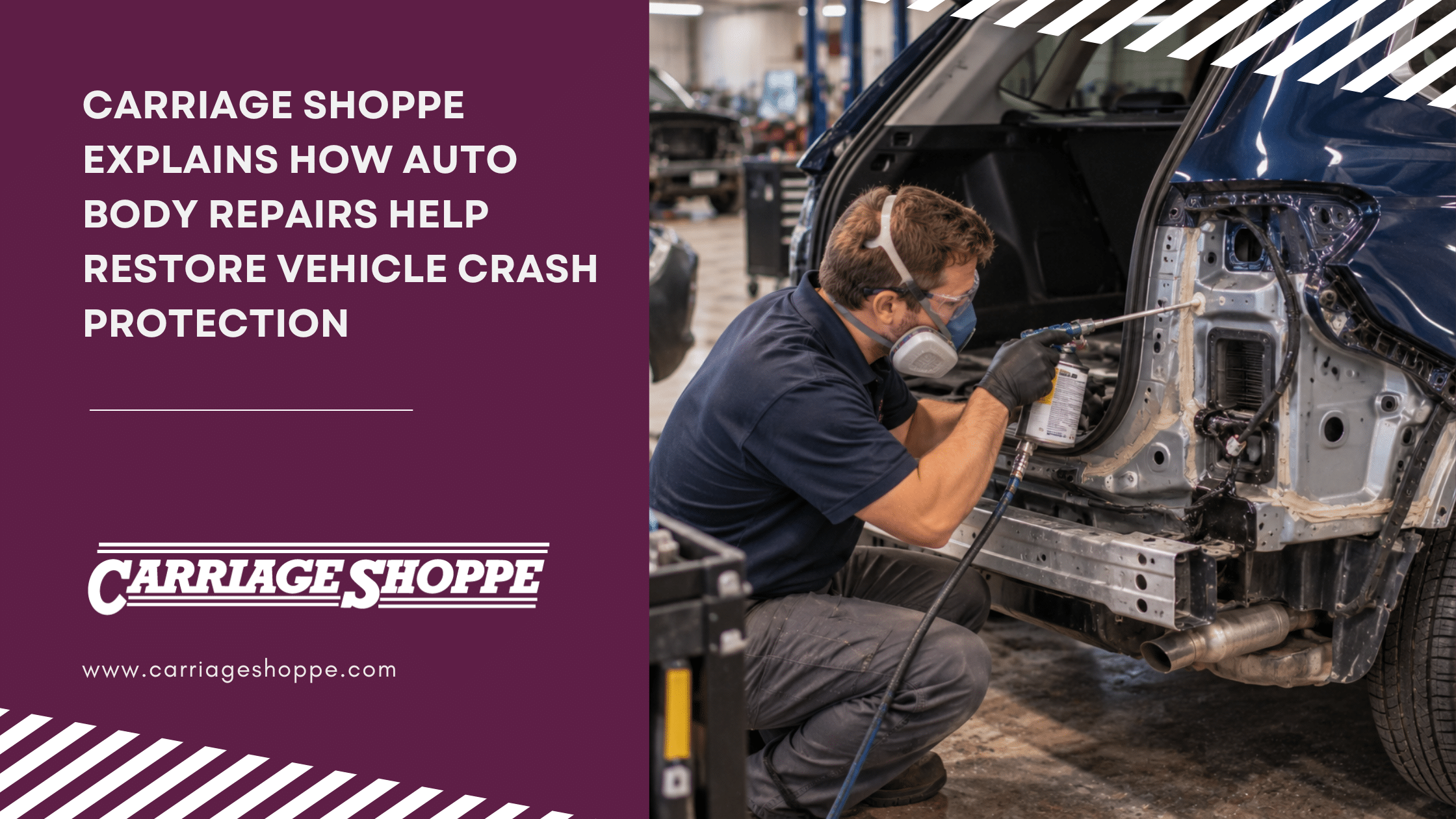

Fort Collins, CO – November 11, 2026 – PRESSADVANTAGE –
Carriage Shoppe, part of Yoder Collision Network, is sharing consumer guidance explaining how collision repairs address vehicle structures and safety-related components following an accident. The November information focuses on three aspects of vehicle restoration: identifying damage to crash management structures, following manufacturer-specific repair procedures, and verifying completed repairs.
Modern vehicles incorporate engineered structures designed to manage collision forces and help protect occupants. Damage affecting these components may not be visible from the exterior, making appropriate inspection and repair planning important when determining the scope of collision restoration.
The first consideration involves structural integrity and energy-absorbing components. Front and rear reinforcement systems, structural rails, pillars, and mounting points are designed to perform specific functions during a collision. Damage to these areas may require additional evaluation even when exterior panels appear repairable.
For example, an impact involving a bumper may affect reinforcement beams, energy absorbers, or attachment points concealed behind the bumper cover. These components may require inspection or replacement depending on their condition and the vehicle manufacturer’s instructions. Restoring the exterior bumper alone does not establish whether the underlying crash management components have been addressed.
Information about damage assessment and body restoration is available through Yoder Collision Network’s auto body repair services. The repair process may involve disassembly, structural evaluation, and additional documentation when concealed damage is identified.
The second consideration involves manufacturer-specific repair requirements. Modern vehicles use different grades of steel, aluminum, and other materials that may have restrictions involving straightening, heating, welding, or sectioning. Certain damaged components may require replacement, while others can be repaired using methods permitted by the manufacturer.
These requirements can vary between vehicle brands and model years. Manufacturer instructions may also specify joining methods, corrosion protection, and structural measurement procedures, making vehicle-specific repair information relevant to the planning process.
Yoder Collision Network provides information about accident-related restoration through its collision repair services. The network also maintains information about OEM certification programs, although individual certifications may apply to particular facilities or vehicle brands rather than every location within the organization.
Occupant restraint systems represent another consideration when reviewing manufacturer repair instructions. Depending on the collision, seat belts, airbags, sensors, and related components may require inspection or replacement under vehicle-specific procedures. These requirements depend on the nature of the impact, affected components, and whether applicable systems were activated.
Electronic driver-assistance technologies can also influence the repair process. Vehicles equipped with cameras or radar sensors may require diagnostic scanning, component inspection, or calibration following certain repairs. These procedures are determined by manufacturer requirements and the work performed rather than applying automatically to every collision.
The third consideration involves post-repair verification. Depending on the original damage and completed work, final checks may include structural measurements, component installation, panel alignment, mechanical inspections, or electronic system procedures. These operations help establish whether the applicable repair requirements have been completed.
Repair documentation can provide additional information about the restoration process. Records may identify replaced components, supplemental damage findings, manufacturer-required operations, and applicable diagnostic or calibration procedures.
The November guidance also addresses why preliminary repair estimates may change after disassembly. Removing damaged exterior components can reveal structural, mechanical, or electronic conditions that were not visible during the initial assessment. Additional findings may require revised repair plans, supplemental insurance documentation, or changes to the expected completion schedule.
Seasonal driving conditions provide additional context for Northern Colorado vehicle owners. When collision repairs disturb protective coatings, seam sealers, or corrosion prevention materials, manufacturer procedures may require those protections to be restored. These operations can be particularly relevant in areas where vehicles encounter winter moisture and road treatments.
The consumer guidance identifies structural damage assessment, manufacturer-specific repair methods, and final verification as three distinct parts of the collision restoration process. The procedures required for an individual vehicle depend on its construction, the extent of the damage, and the repair operations performed.
Although no repair process can guarantee vehicle performance in a future accident, appropriate damage assessment and adherence to applicable manufacturer procedures help address affected components according to vehicle-specific requirements. The November information is intended to explain how these technical considerations differ from cosmetic bodywork alone.
About Carriage Shoppe
Carriage Shoppe is part of Yoder Collision Network, serving Fort Collins and surrounding Northern Colorado communities. The network provides collision repair, auto body repair, paintless dent repair, fleet collision repair, and related vehicle restoration services through its Carriage Shoppe, ABRA Fort Collins, and ABRA Greeley locations.
###
For more information about Carriage Shoppe, contact the company here:
Carriage Shoppe
Micah
970 482 3597
officestaff@carriageshoppe.com
327 S Link Ln, Fort Collins, CO 80524



