Johnson Auto Body Explains What Happens When a Collision Damages a Vehicle’s Quarter Panel
Knightdale, NC - September 17, 2026 - PRESSADVANTAGE - Johnson Auto Body has published consumer guidance explaining how

Press Release Disclaimer: This is a press release distributed through the XPR Media network. It has not been independently verified by our newsroom.
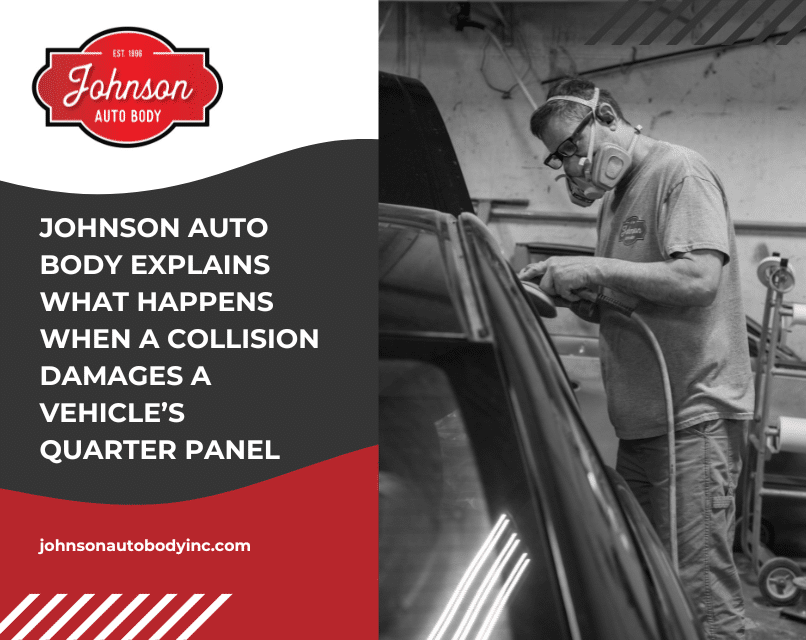

Knightdale, NC – September 17, 2026 – PRESSADVANTAGE –
Johnson Auto Body has published consumer guidance explaining how quarter-panel damage is evaluated after a collision. The September resource focuses on three decisions that can shape the repair plan: determining the extent of the affected area, identifying whether the damaged panel can be repaired or requires replacement, and accounting for adjoining components when the collision extends beyond the visible exterior damage.
The guidance expands on Johnson Auto Body’s auto body repair information by focusing specifically on quarter panels, which are generally located along the rear side of a vehicle and can extend around the rear wheel opening toward the bumper, trunk, liftgate, or roof area.
Unlike some exterior components that can be removed as individual bolt-on parts, quarter panels may be integrated into the vehicle body. This construction makes the location and characteristics of the collision damage important when technicians develop the repair plan.
Evaluation begins with the visible condition of the panel. Collision damage can include scratches, dents, creases, torn material, deformation around the wheel opening, or changes in the relationship between the quarter panel and nearby components.
Rather than using dent size alone to determine the repair method, technicians can evaluate where the damage occurred and how the material was affected. Damage within an accessible portion of a panel can present different repair considerations from deformation near an edge, body line, wheel opening, or attachment area.
The material used in the quarter panel also contributes to repair planning. Depending on the vehicle, the component may be constructed from steel, aluminum, or another material. Identifying the material allows technicians to review the repair information applicable to that vehicle and component before selecting repair operations.
Johnson Auto Body’s collision repair information provides additional context about evaluating accident-related damage and developing a repair plan.
The second major decision involves repair versus replacement. When the condition and applicable procedures allow, damaged metal may be restored using body repair techniques followed by the necessary preparation and refinishing. Other conditions, including severe deformation, torn material, damage at certain attachment areas, or manufacturer repair limitations, can lead to consideration of panel replacement.
Replacement can involve more operations than exchanging a bolt-on component because an integrated quarter panel may be joined to the vehicle body at multiple locations. Manufacturer repair information can identify applicable sectioning locations, joining methods, preparation requirements, and other procedures associated with installing the replacement component.
Repair operations that disturb factory coatings or expose metal can also make corrosion-protection procedures relevant. The applicable repair information can identify where protective materials, seam-related procedures, or other corrosion-control steps are required as the repaired area is prepared for reassembly and refinishing.
The third part of the guidance addresses components surrounding the quarter panel. A rear-corner or side impact can occur near the rear door, bumper, taillight, trunk or liftgate, and wheel opening. These components are evaluated when their position or condition indicates involvement in the collision.
Panel fit can provide useful information. Changes such as a rear door contacting the quarter panel, a displaced taillight, altered gaps, or a bumper that no longer aligns with the surrounding body can help identify areas requiring closer inspection.
Damage near the rear wheel opening can similarly make the relationship between the body and wheel area relevant. An impact in this location does not automatically establish suspension or mechanical damage. Instead, the collision location and documented conditions determine whether further evaluation of nearby components is appropriate.
Access can also affect what technicians are able to inspect. Interior trim or cargo-area materials may cover the back of portions of the quarter panel. When required for evaluation or repair, applicable interior components can be removed to provide access to the affected area.
This helps explain why quarter-panel repair can include operations that are not apparent from an exterior inspection. The repair plan reflects the specific areas involved rather than assuming that every quarter-panel collision requires the same level of disassembly.
Refinishing follows the physical body repair when required. Depending on the repair, this can include preparation of the restored surface and application of the appropriate refinishing materials. The relationship between the quarter panel and adjoining exterior panels can also be considered when developing the refinishing approach.
The September guidance is intended to distinguish quarter-panel damage from a simple dent-size assessment. Its three-part framework directs attention to the condition and construction of the quarter panel, the repair-versus-replacement decision, and the relationship between the damaged area and surrounding vehicle components.
This framework provides a more specific explanation than general collision-repair information because quarter panels can combine exterior appearance, integrated body construction, wheel-opening geometry, adjoining components, and refinishing considerations within the same repair area.
Additional information about the company’s local facility is available through Johnson Auto Body’s Knightdale location resource.
The central point of the September publication is that quarter-panel damage is evaluated according to the affected component and documented collision conditions. Material, damage location, repairability, attachment areas, adjoining components, manufacturer procedures, and refinishing requirements can each contribute to the developed repair plan.
Johnson Auto Body is a locally owned collision repair business founded in 1996. The company provides collision repair and auto body repair services for Knightdale, Raleigh, Wendell, and surrounding Wake County communities. Its facility is located at 821 H & R Drive, Knightdale, NC 27545.
###
For more information about Johnson Auto Body Inc, contact the company here:
Johnson Auto Body Inc
Todd McGee
(919) 217-2887
todd@johnsonautobodyinc.com
821 H and R Dr, Knightdale, NC 27545