The Huge Investment in Computer Centers Will Have Unexpected Results
In a just-published book The Limits of AI, author William Meisel argues that the huge investments in computer centers

Press Release Disclaimer: This is a press release distributed through the XPR Media network. It has not been independently verified by our newsroom.
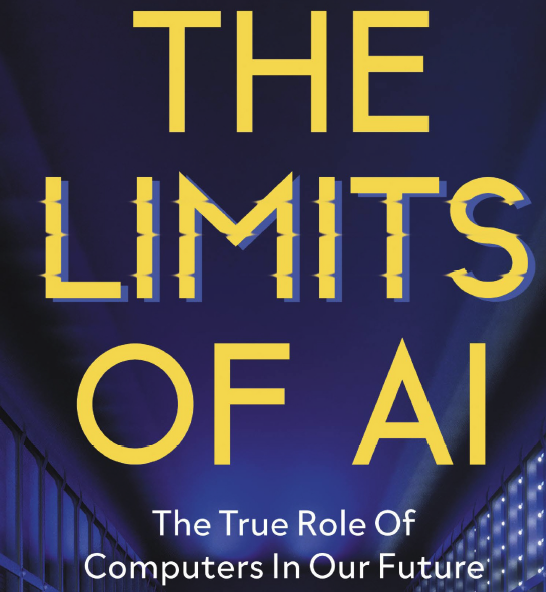

In a just-published book The Limits of AI, author William Meisel argues that the huge investments in computer centers to create the next generation of Artificial Intelligence will fail in that objective, but the resulting dramatic growth in inexpensive computing power available will create an unexpected revolution in how humans connect with computers.
Tarzana, CA July 27, 2026 –(PR.com)– In a just-published book, The Limits of AI, author William Meisel argues that the huge investments in computer centers to create the next generation of Artificial Intelligence will fail in that objective, but the resulting dramatic growth in inexpensive computing power available will create an unexpected revolution in how humans connect with computers.
Meisel notes that the current approach to the next generation of AI is to build larger neural networks, extending the success of today’s large neural networks such as OpenAI’s ChatGPT. He argues that the larger neural networks will generate what he calls “Artificial Ignorance,” with models creating too much misinformation and too many “hallucinations.”
Meisel argues that the reason is that neural networks are simply very complex statistical models and are subject to the restrictions of every statistical model: there must be enough quality data available to build a model with so many parameters. If you, for example, double the number of parameters being optimized in the model, he argues that you must increase the amount of data utilized by a much larger factor. Otherwise, he says, the data will be spread in a high-dimensional space that is mostly empty and the model will “over-fit” outliers, creating misinformation and “hallucinations.” Researchers have called this the “curse of dimensionality.”
Further, Meisel argues that the data must be of high quality or the model will simply summarize bad information. He believes that such data is ever harder for developers to access in an environment where much of the data–both text and computer code–is generated by AI today and is thus not the independent data needed to generate new “intelligence.”
But Meisel notes an upside. He predicts that the amount of computing power will grow much faster than in the past because of the large computing centers coming online and other trends such as Nvidia’s graphical processing chips. Just as a large supply of oil results in a drop in prices, he argues that the large supply of computing power will dramatically reduce the cost of computing through services such as Amazon Web Services. This, he believes, will allow new breakthroughs.
Meisel predicts a major impact will be in the abilities of digital assistants such as Apple’s Siri and Anthropic’s Claude. Both now offer interaction by speech or text, making them useful even when privacy issues make speech difficult. Meisel argues, however, that today’s assistants still fall short of sustained, genuinely interactive conversation. The increase in computing power, Meisel predicts, will allow the digital assistants to maintain a long, truly interactive conversation by voice or text.
Meisel argues that a conversation can be more effective than one-way messaging. A conversation can deliver information and allow follow-on clarifications. It can talk a user through using features of another application. Those characteristics, in themselves, are a primary driver of digital assistants being our primary user interface with digital systems; they will essentially be an alternative to today’s web search. This doesn’t mean that a screen can’t be used to deliver information when it is available; that can be part of the conversation. But a voice conversation supports devices like earbuds without a screen.
Beyond its basic effectiveness, Meisel argues that another feature will strongly motivate the companies delivering the digital assistants — their potential to generate profits. Some of today’s digital assistants already allow connections with outside services without requiring users to leave the assistant. Amazon’s Alexa for Shopping, for example, allows users to ask questions about products, such as whether a coffee maker is easy to clean. Google says Gemini can prepare a coffee order through DoorDash, subject to the user’s final confirmation. As the digital assistants become our major computer interface, Meisel predicts that every company will need to support an interactive assistant through the assistants’ Application Programming Interfaces. In his view, having a company digital assistant that supports these APIs will be as essential as a company having a web site today. In many cases, they will be an alternative to customer service lines. The digital-assistant companies could charge fees on transactions completed through their platforms, similar to commissions Apple charges on certain App Store transactions. Unlike the oft-cited loss-making characteristic of the larger neural networks, Meisel argues that there is a clear path to profits in truly conversational digital assistants.
Meisel summarizes, “The cheaper computing power will allow human language to be our major connection with digital systems. It’s not clear how long this will take, since there are issues such as a shortage of electrical power and local opposition to building computer centers, but the trend is unstoppable.”
About the Book
The Limits of AI: The True Role of Computers in Our Future is currently available through Amazon and other retailers.
About the Author
William Meisel wrote an early technical book on Computer Pattern Recognition while a professor of Electrical Engineering at USC. He ran the Computer Science division of a defense company and founded and ran a company developing speech recognition technology. He has written a number of books on AI subjects, including Computer Intelligence, Evolution Continues: A Human-Computer Partnership, and The Lost History of Talking to Computers.
Contact
William Meisel
www.williammeisel.com
wmeisel@tmaa.com
Contact Information:
William Meisel
818-693-9450
Contact via Email
www.williammeisel.com
Landline: 818-708-0962
Read the full story here: https://www.pr.com/press-release/974698
Press Release Distributed by PR.com
Media gallery