Nobel Prize in Physics Awarded for Observatory Detecting ‘Ghost Particles’
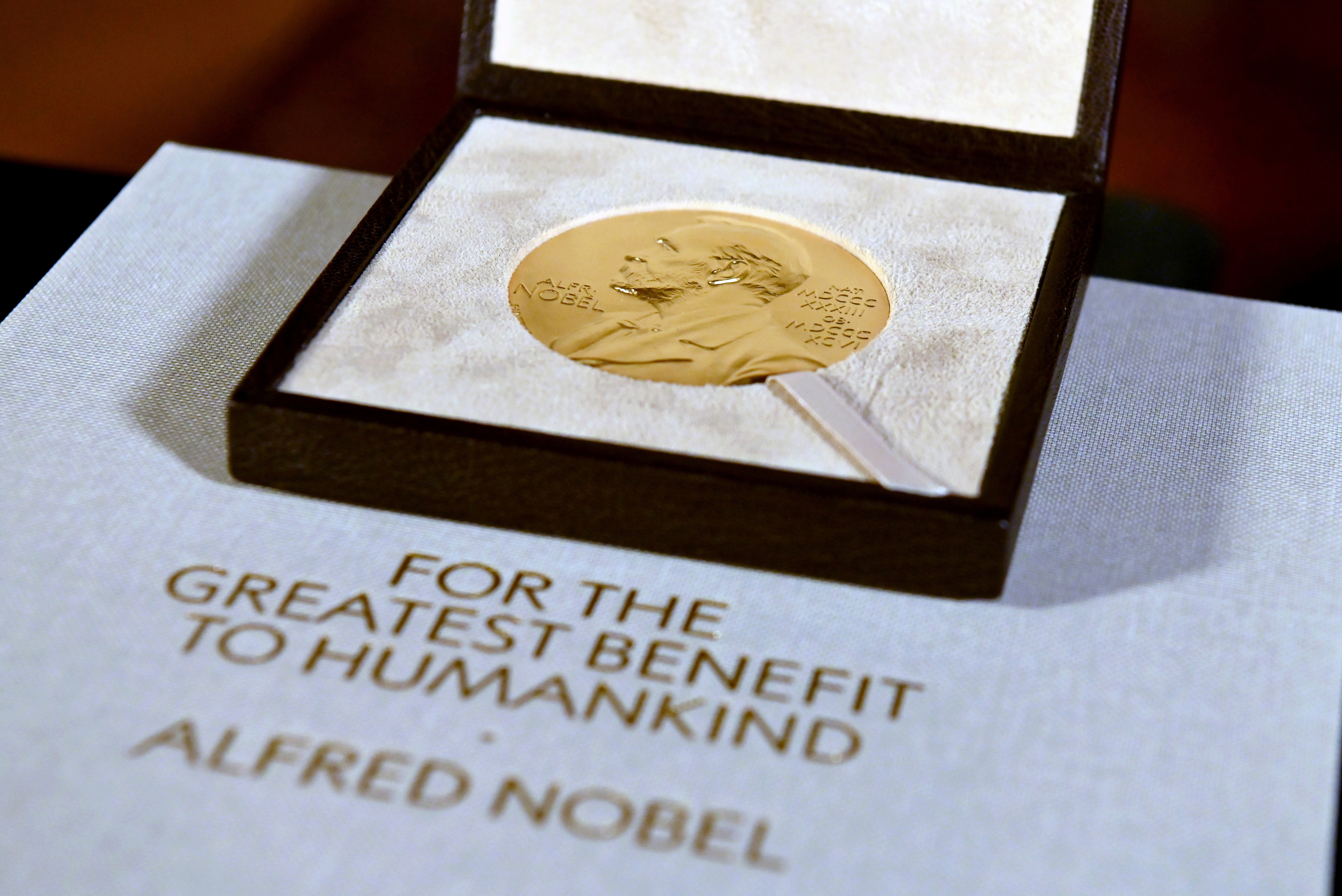
The Nobel Prize in Physics was awarded for pioneering work on an observatory that detects 'ghost particles' originating from space.


 Baltimore, MD, October 6, 2026 — The Nobel Prize in Physics has been awarded for groundbreaking work on an observatory designed to detect ghost particles, also known as neutrinos, which originate from outer space. Neutrinos are elusive subatomic particles that interact very weakly with matter, making them incredibly difficult to observe. They are often referred to as ‘ghost particles’ due to their ability to pass through vast amounts of matter, including entire planets, almost unimpeded.
The observatory in question was instrumental in pioneering methods for capturing these fleeting particles. The research leading to this award focused on the development and application of this specialized observatory, enabling scientists to study neutrinos originating from celestial sources. Understanding these particles provides crucial insights into some of the universe’s most energetic and violent phenomena, such as exploding stars (supernovae) and active galactic nuclei.
The work recognized by the Nobel Committee advanced the field of astrophysics and particle physics by providing a new window into cosmic processes. The ability to detect and analyze these space-born neutrinos allows researchers to probe environments that are otherwise inaccessible to traditional astronomical instruments. This opens up new avenues for understanding the fundamental laws of nature and the evolution of the cosmos.
Details regarding the specific scientists or institutions credited with this pioneering work, the timeline of the observatory’s development, or the exact nature of the ‘pioneering work’ beyond its detection capabilities were not detailed in the provided summary. However, the award highlights the significance of developing advanced observational tools to unlock the universe’s deepest secrets.
The detection of neutrinos from space represents a major scientific achievement, pushing the boundaries of what can be observed and understood about the universe. This recognition underscores the importance of fundamental research and technological innovation in expanding scientific knowledge.
Story summarized from the original created by SignalNews Network on www.bbc.co.uk, see more information here.
Media gallery